Gandhiji's Talisman was printed at the back of every school textbook
Gandhiji's Talisman was printed at the back of every school textbook.
Gandhiji's Talisman was printed at the back of every school textbook.
The original post appeared on LinkedIn. You can view it below on Linkedin or scroll below for the web version.
Gandhiji's Talisman was printed at the back of every school textbook. 'Recall the face of the poorest and most helpless person you have seen.' We all read it. But somewhere in a forest, a child carrying that same textbook is walking through an elephant corridor just to sit for her exam. That is when the Talisman stops being a quote and starts being a question.
Sharing experiences at the end of the day is often the most fascinating part of our days. Gourav and I come back with very different experiences, different vantage points, different opinions - and disecting them together releases dopamine for us.
Last year, as a Block Development Officer, I was conducting Madhyamik (Class 10) examinations. This year, he as an officer was responsible for ensuring students could take them. But there is a catch. He is a forest officer. It never occurred to me how students living inside forests managed to appear for exams, until a couple of days back when he brought it up.
Many of these students live deep inside forest areas. Accessibility to schools is limited. But an even bigger challenge confronts them: man-animal conflict. Elephant movement is not an abstract environmental issue. It is part of the daily landscape of the people and the daily job of a forest officer. These children walk kilometres through forest paths before dawn, through the same corridors that elephants use.
The students were prepared, but they were scared. They wanted to write their exams, yet a death in the area a couple of years back weighed heavily on their minds. Since then, the Forest Department has been facilitating the movement of these children, escorting them from their homes to examination centres, coordinating safe passage, ensuring they reach on time.
This is what social development looks like when it seeks universality.
Progress in any sphere remains limited if it is not universal. If systems do not account for those at the margins, their application remains partial and the idea itself must eventually evolve into something larger and more inclusive. Universality, to me, is like an algorithm that is always applicable. A principle that holds regardless of circumstance.
In public administration and policymaking, this idea is often implicit. The idea of the "last mile." The spirit of Antyodaya, that even those who would otherwise never cross our minds must be included. And of course - Gandhiji's Talisman. Policy evolves when it internalises this principle. From targeted benefits to increasingly universal frameworks, from conditional support to unconditional direct transfers, the arc bends toward inclusion.
Universality is not about scale alone. It is about system design that assumes everyone counts.
And sometimes, it looks like escort vehicles moving through elephant corridors so that a child can sit for an exam without fear.
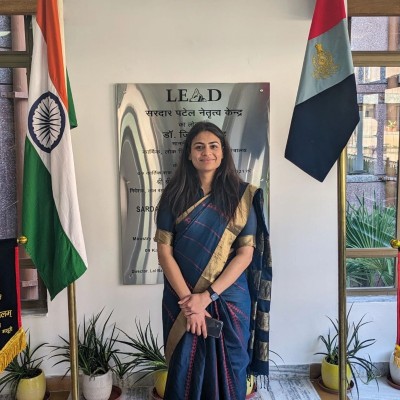
Pic: Same end, different means.